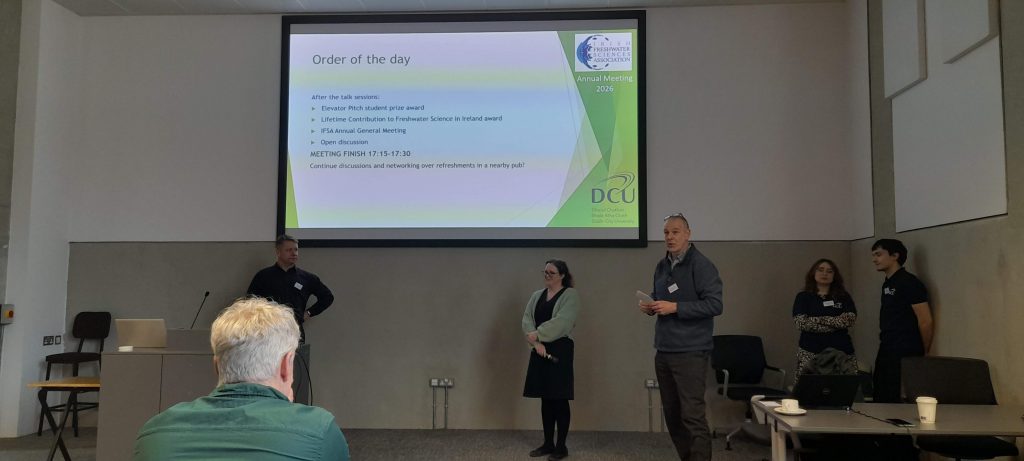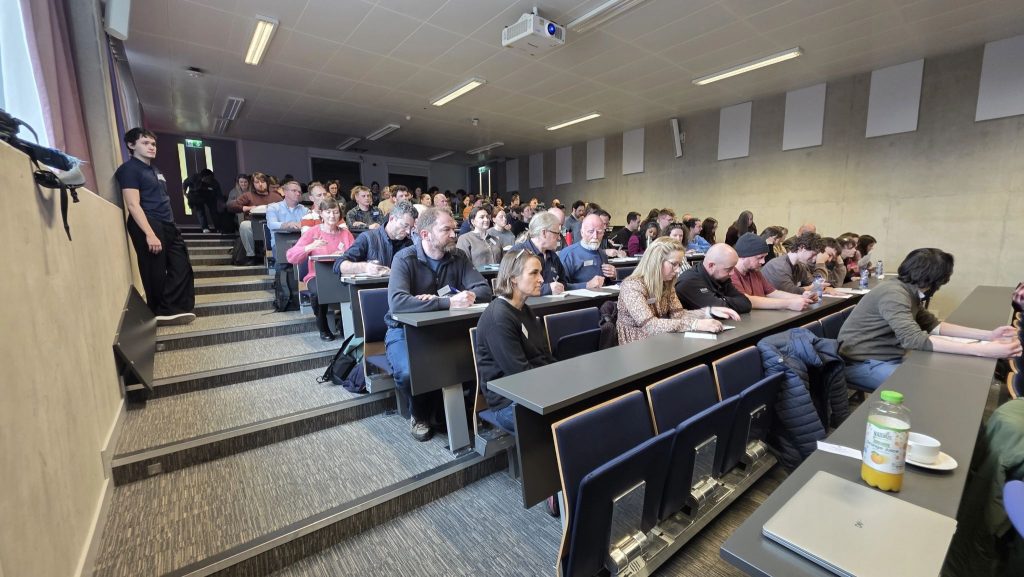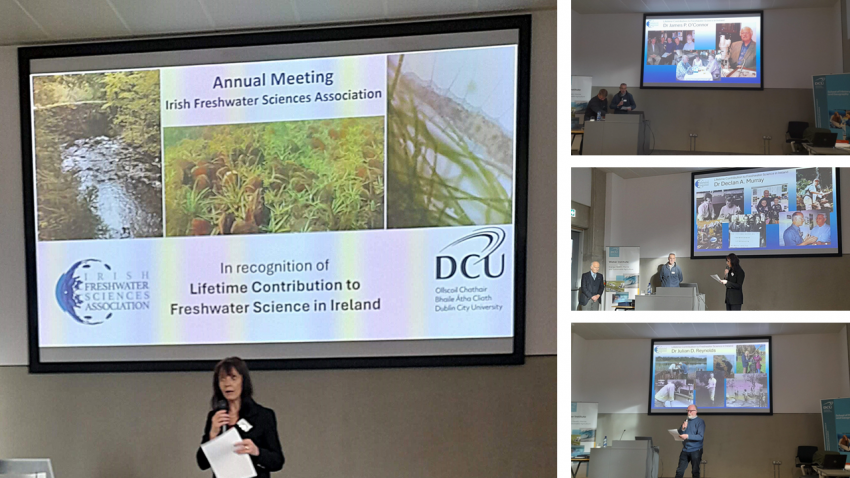
At the IFSA Annual Meeting 2026, we honoured three prominent scientists for their lifetime contribution to freshwater science in Ireland: Dr Declan Murray, Dr Julian Reynolds and Dr Jim O’Connor.
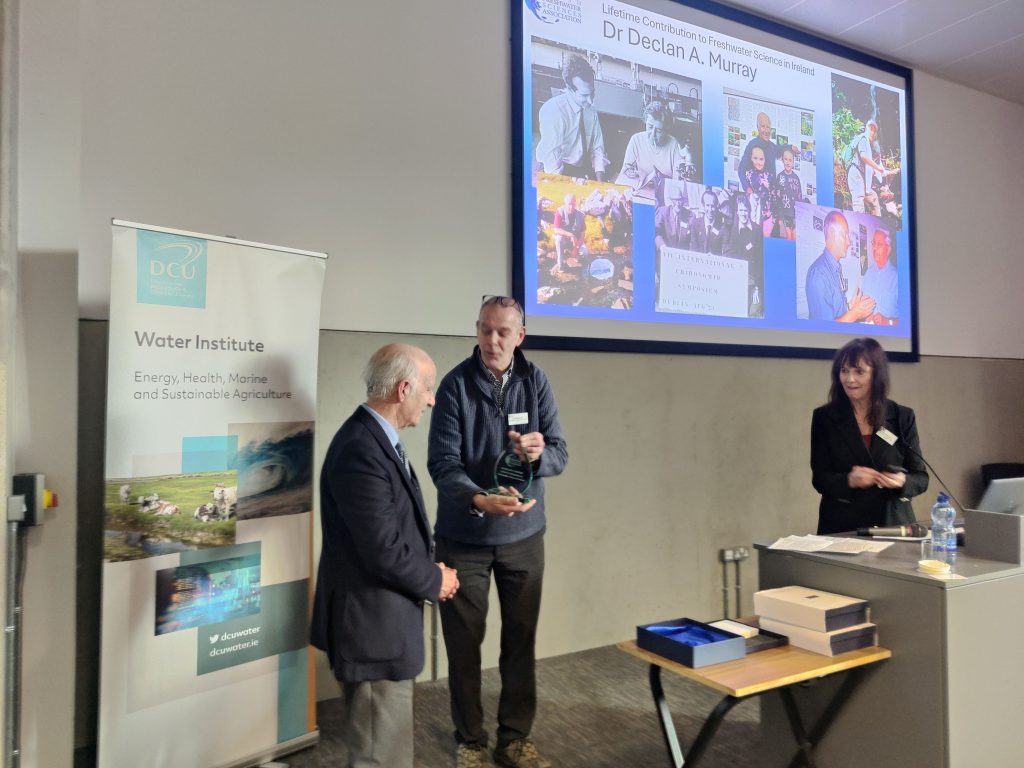
Dr Declan A. Murray
Appointed to University College Dublin in 1968, Declan Murray has dedicated his career to the monitoring and assessment of surface water quality. As a Senior Lecturer in Zoology, he fundamentally advanced Irish limnology by pioneering the use of paleolimnology, utilizing sediment core analyses to reconstruct the historical nutrient trends and trophic states of Ireland’s lakes.
Dr. Murray is recognized as a leading international authority on the Chironomidae (non-biting midges). His contributions to pan-national taxonomic revisions have resulted in several standard reference works that remain essential for freshwater researchers worldwide. His expertise in these macroinvertebrate bioindicators has taken him across the globe, from research institutes in Europe and the USA to the remote aquatic habitats of the Cook Islands, Tahiti, and the Atlantic archipelagos.
Beyond his primary research, Dr. Murray has led environmental studies for the EU and various national conservation bodies. His legacy is equally defined by his mentorship at UCD, where he supervised 16 PhDs and numerous MSc candidates. This award recognizes a lifetime of scientific rigor that has bridged the gap between microscopic taxonomy and global environmental health.


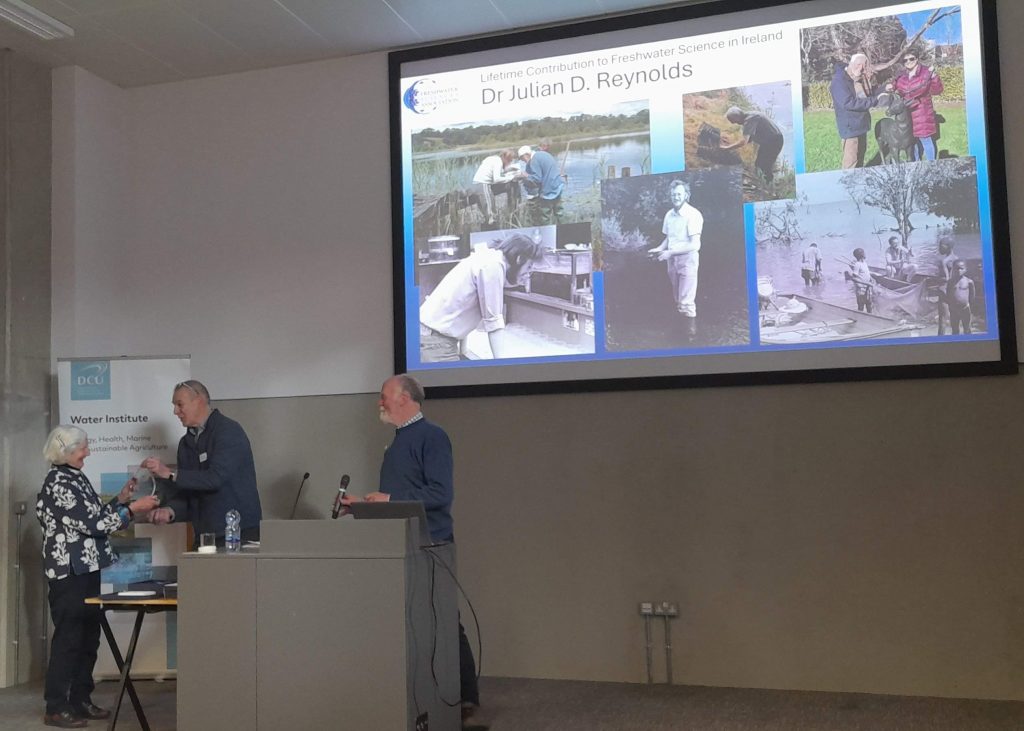
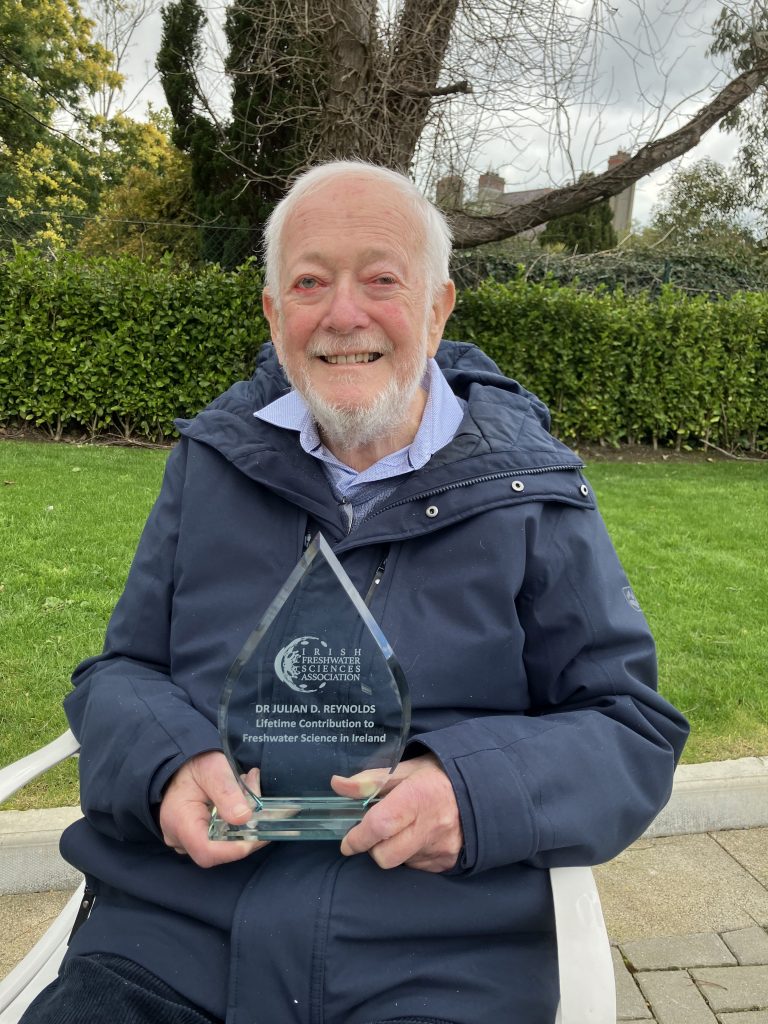
Dr Julian D. Reynolds
From the streams of Mayo to the reservoirs of Ghana and the saline lakes of British Columbia, the career of Julian Reynolds represents a global odyssey in ecological discovery. A Foundation Scholar at Trinity College Dublin (TCD), Dr. Reynolds established himself early as a versatile researcher, balancing complex fish population studies with pioneering surveys for the University of Ghana’s Volta Basin Research Project.
Returning to TCD in 1977, he spent nearly three decades shaping the fields of Freshwater and Fisheries Biology. As a Senior Lecturer, Fellow (FTCD), and former Head of the Zoology Department, his legacy is rooted in mentorship, having supervised approximately 120 undergraduate and postgraduate researchers. His scholarly output includes six books and over 150 refereed articles focusing on freshwater fishes, invertebrates, and his signature specialty: the white-clawed crayfish.
His influence extends far beyond the lecture hall and laboratory. A founder member of CRAYNET and an Honorary Life Member of the International Association of Astacology, Dr. Reynolds has been a vital bridge between Irish and international science. Even in retirement, his intellectual curiosity remains boundless—spanning crustacean ecology, field botany, and nineteenth-century social history. This award honours a lifetime of rigorous inquiry that has profoundly deepened our understanding of Ireland’s aquatic heritage.
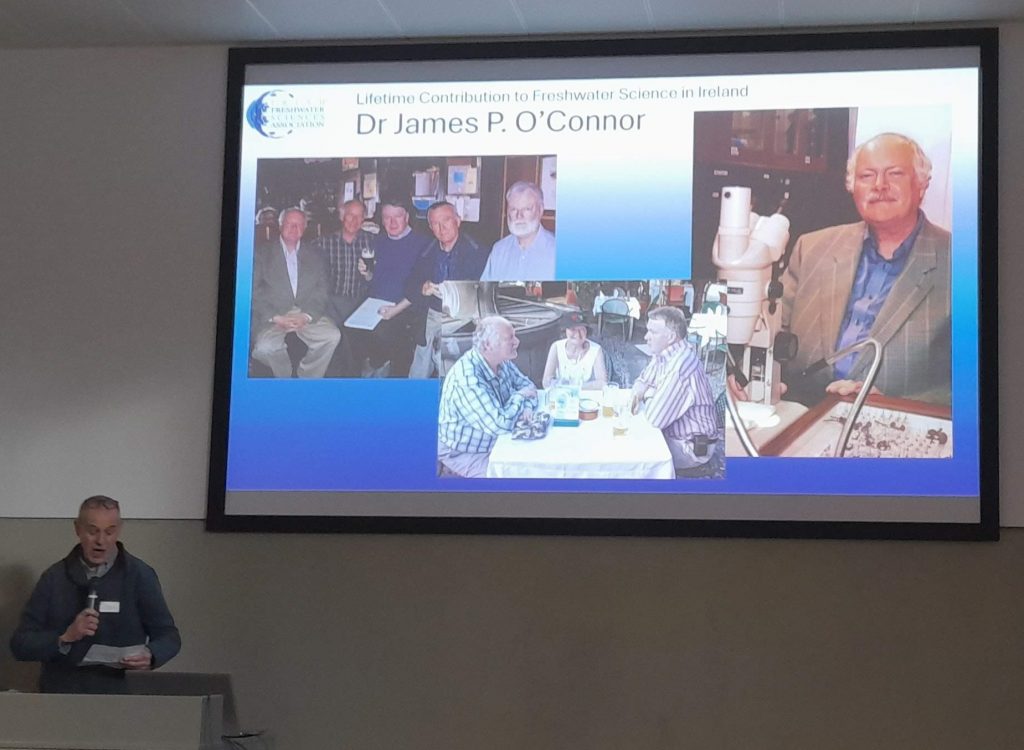
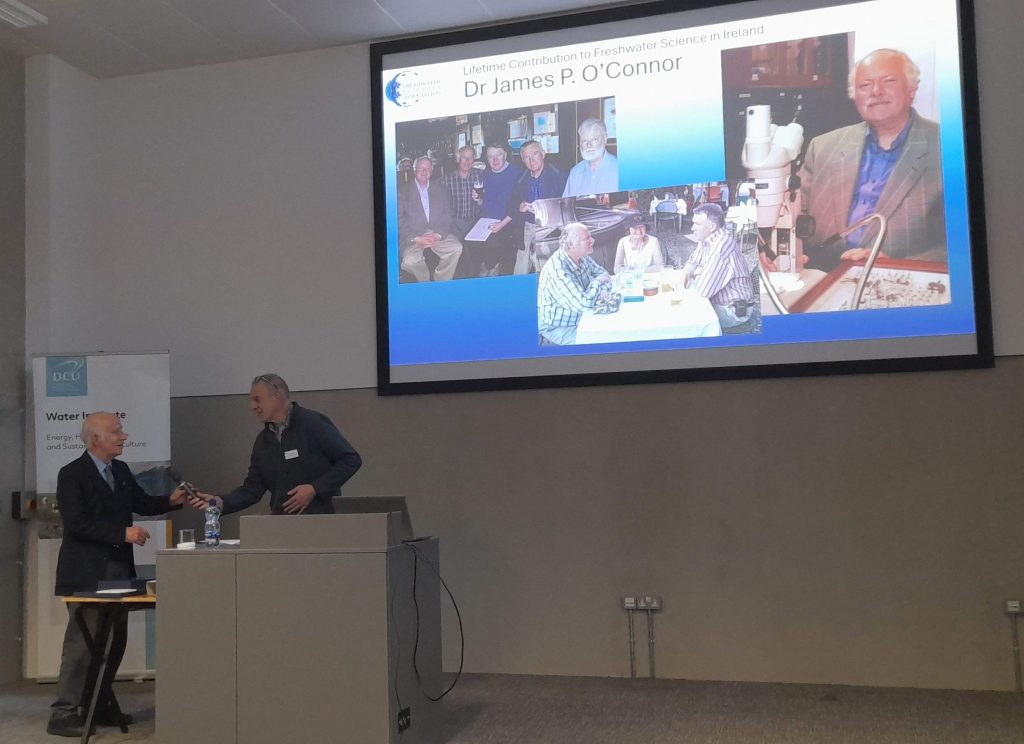
Dr James P. O’Connor
Jim O’Connor is a preeminent figure in Irish entomology and freshwater science, whose career spans over five decades of dedicated research, curation, and mentorship. Born in 1948, Jim’s fascination with insects began in childhood, leading him to University College Dublin. Under the guidance of Dr. John Bracken and Professor Carmel Humphries, he developed a lifelong expertise in Trichoptera (caddisflies), completing his Ph.D. in 1975.
That same year, Jim was appointed entomologist at the National Museum of Ireland. He was instrumental in the curation and modernization of the National Entomological Collections and served for 13 years as the Keeper of the Natural History Museum. His prolific academic output includes 587 publications, featuring foundational bibliographies, catalogues, and atlases that remain the definitive resources for Irish insect records.
Elected a Member of the Royal Irish Academy in 2005, Jim has described 82 species new to science, including 14 species of Trichoptera. His influence extends deeply into scientific publishing, having served as Chairman of the Irish Naturalists’ Journal and editor for the Irish Biogeographical Society for over 40 years. Though retired since 2010, Jim continues his research today, leaving an indelible mark on the understanding of Ireland’s aquatic biodiversity.
IFSA 2026 Photo Gallery